Beyond ‘green’: what sustainable events look like when you can measure the footprint
“Sustainable” has become a default claim in event marketing. The problem is that it’s often hard to compare, hard to evidence, and even harder to report on once the event is over.
For organisers, agencies and procurement teams, the conversation has moved on. It’s no longer enough to say an event was “greener”. Stakeholders want to know what changed, what was avoided, and what can be demonstrated with confidence.
That’s why the most useful version of sustainability is measurable. Not because anyone wants extra admin, but because measurement turns sustainability into something you can plan, improve, and sign off.
At 15Hatfields, sustainability is built into day-to-day delivery, including access to tools that help clients understand and report on an event’s footprint, so evidence doesn’t become a separate project.
What to ask for beyond “green” language: a simple evidence framework
If you’re weighing up options, the quickest way to cut through vague claims is to ask for evidence in a consistent structure. You’re not trying to interrogate anyone; you’re simply gathering decision-ready proof that stands up to stakeholder and procurement questions.
A practical framework is to ask for proof across five areas.
1) Standards and governance
- What sustainability standards or accreditations does the venue work to?
- How are policies applied in operations and procurement, not just published on a website?
2) Energy and operations
- What’s the energy approach and how is performance managed?
- What does the venue do day-to-day to reduce waste, materials and unnecessary consumption?
3) Food and purchasing
- How is catering sourced and designed to reduce impact?
- What’s the approach to waste, single-use items and supplier standards?
4) Event delivery and support
- What can the venue do to help you reduce the footprint of your specific event, based on your format and agenda?
- What does the venue handle as standard, and what sits with you as the organiser?
5) Measurement and reporting
- What can you measure before and after the event?
- Can the venue provide an output you can use internally, such as a post-event footprint summary?
The point isn’t to create more process. It’s to get to sustainability you can evidence, improve and report on with confidence.
Where event emissions typically come from (and what you can influence)
Most event footprints are driven by a handful of predictable factors. The good news is that organisers have more influence than they think, particularly if they plan early.
Travel and commuting (and why location really matters)
For many events, delegate travel is the biggest driver of emissions. It’s also one of the areas where a venue choice makes an immediate difference, because if the journey is easy, people are far more likely to take public transport.
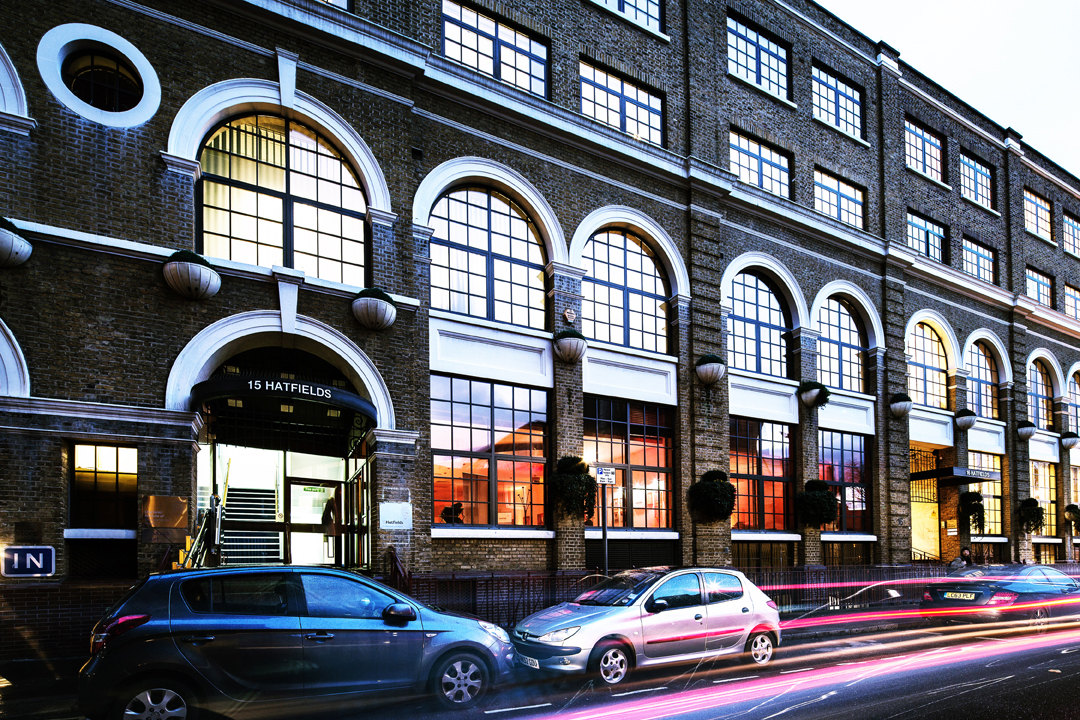
That’s where 15Hatfields performs strongly. Being in central London (SE1), with straightforward access via public transport, makes it a practical option for teams coming from across the city and further afield. It also makes joining instructions simpler, which helps keep the delegate journey smooth and predictable.
Practical actions:
- Choose a venue with strong public transport links to reduce reliance on taxis and car travel.
- Include clear travel guidance in your joining instructions so the “default” journey is public transport.
- Consider start and finish times that support rail and underground travel and reduce peak-hour stress.
Catering (high-impact, without compromising experience)
Food is one of the simplest areas to improve without making an event feel “less than”. Done well, it can lift the delegate experience: better timing, better quality, and fewer wasteful extras.
At 15Hatfields, catering is designed to support sustainable choices without making it a talking point, including an emphasis on responsible sourcing and dietary confidence. The result is a feel-good experience that still stands up to internal expectations.
Practical actions:
- Brief catering around seasonal produce and waste reduction, rather than over-specifying.
- Use realistic numbers and timings to avoid over-ordering and unnecessary waste.
- Confirm dietary requirements early so the kitchen can plan properly and deliver smoothly.
Energy and AV (be intentional, not under-specced)
Production choices matter, but the answer isn’t to strip events back. It’s to be intentional about what you use and why, then make sure it’s supported properly on the day.
Strong in-house AV support at 15Hatfields helps you plan efficiently, rather than over-specifying “just in case”, and gives you confidence that what you’ve planned will run smoothly on the day.
Practical actions:
- Avoid over-specifying kit “just in case” and build your set-up around the agenda.
- Create a realistic run-of-show so tech support matches what’s happening in the room.
- Use hybrid only when it genuinely serves the event objectives, not as a default.
Materials, printing and single-use items (easy wins that guests appreciate)
Signage, badges, packaging and disposables add up. The good news is that many reductions are invisible to delegates, except that the event feels cleaner and calmer.
15Hatfields is set up to minimise single-use items as standard, which helps you avoid waste build-up at breaks and keeps the experience feeling polished, calm and considered without creating extra work for the organiser.
Practical actions:
- Reduce unnecessary printing and use digital where it improves guest experience.
- Reuse signage and materials where possible.
- Choose venues and suppliers that actively avoid single-use plastics and unnecessary packaging.
Once those practical choices are in place, measurement becomes the part that turns good intent into decision-ready proof, especially when stakeholders need something clear to sign off.
Practical reduction steps that protect the delegate experience
A sustainable event should still feel like a great event. In practice, the best improvements are the ones delegates barely notice, because they’re built into smart planning and delivery.
A few that work consistently:
- Design the agenda for flow: fewer bottlenecks, less rushing, fewer last-minute changes.
- Treat catering as a quality moment: well-timed, thoughtfully planned food improves experience and reduces waste.
- Make refills and reusables feel normal: it’s cleaner, calmer and more pleasant than a sea of disposables.
- Brief suppliers with clarity: good briefs reduce over-ordering, over-production and unnecessary spend.
- Ask for reporting you can actually use: a short, clear post-event output beats a long sustainability statement no one can evidence.
The bottom line
Sustainability is not one decision. It’s a chain of practical choices that become more effective when they can be measured. Measurement gives you a baseline, a way to improve, and the confidence to report back internally with credibility.
If you’re planning an event and want sustainability that’s measurable and manageable (without compromising experience), we’d love to show you how 15Hatfields supports it in practice.
Enquire Today