Environmental health training and courses
Develop the skills your team needs with expert-led environmental health training. With nearly 140 years of experience, our flexible courses are available online, in person or tailored to your organisation.

Monday, 6 July 2026, Daniella Rotimi, CIEH Policy and Public Affairs Manager
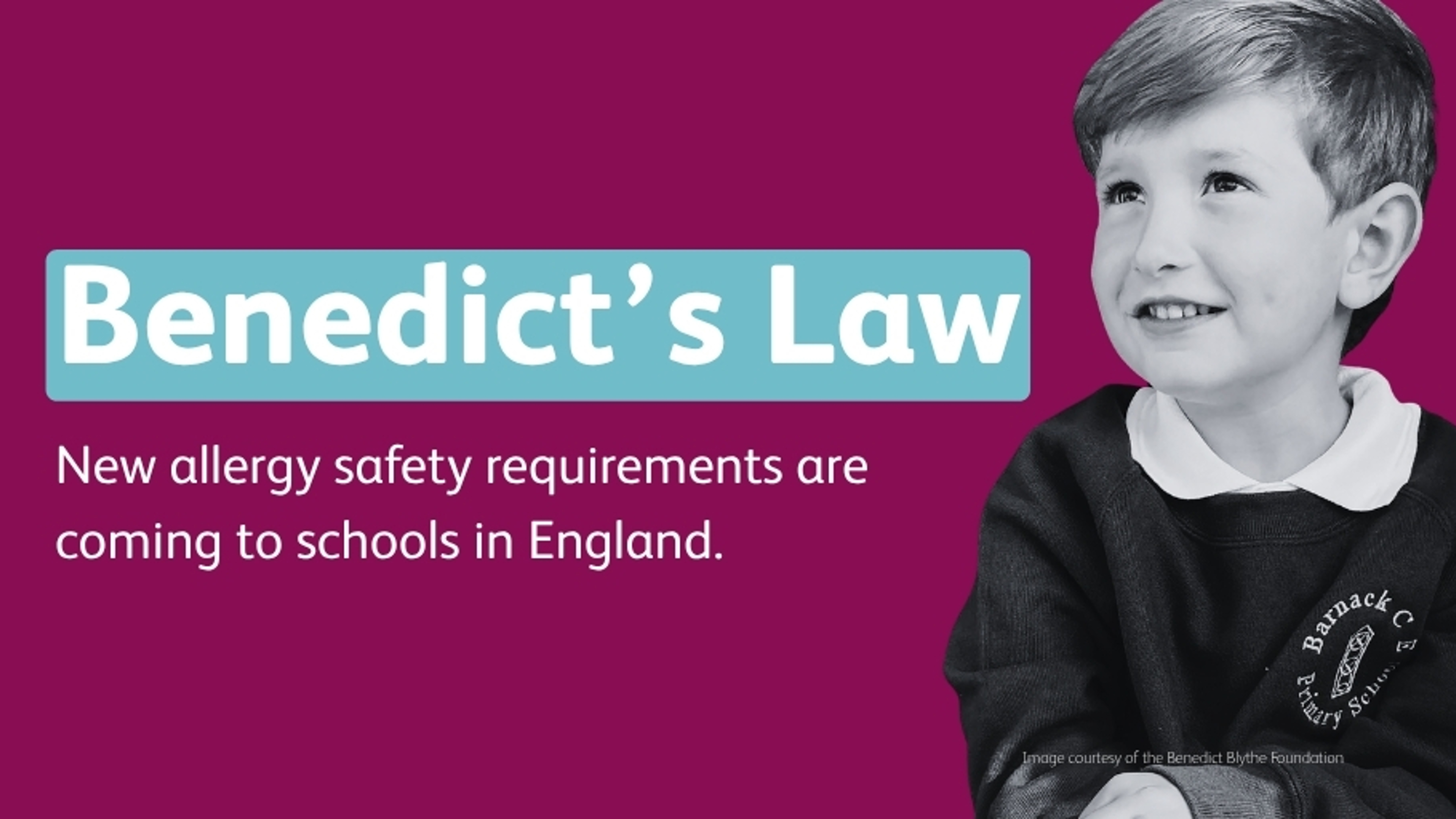
His parents had worked with the school to put an allergy plan in place for him. But that plan was not shared with teaching staff. When Benedict became unwell, there were delays in administering the adrenaline that could have saved his life. The inquest jury concluded his death was caused by a cascade of failures, individual, institutional and systemic. His death was, in his mother's own words, preventable.
The Benedict Blythe Foundation have campaigned ever since to make sure no other family has to go through what they went through. In February 2026, that campaign became law.
Benedict's Law is a landmark moment for food safety in schools, and one that has been hard fought and hard won. Schools are settings where parents and carers hand their children over and trust that they will be kept safe. That trust should never be conditional on whether a particular school happens to have good policies in place, or whether a particular teacher happened to have received training. It should be guaranteed. Benedict's Law takes us a significant step closer to that guarantee.
What schools are now required to do
From September 2026, all schools in England must comply with the new statutory guidance on allergy safety. That means every school must:
Why this matters
Food allergies are on the rise. Around 5 to 8% of children in the UK are affected, making this one of the highest rates in the developed world. An estimated 2 million people in the UK have a formally diagnosed food allergy, and hospital admissions for food-related anaphylaxis more than tripled between 1998 and 2018. The numbers among children and young people showed the steepest increase of any age group.
It is also worth saying that allergies do not always announce themselves in advance. A child can develop an allergy at any point. A reaction can be a child's first. That is why broad, consistent preparation across every school matters, not just for the children already on a list.
Where Environmental Health Practitioners fit in
Environmental health practitioners have a role here that often goes unrecognised in conversations about school allergy safety.
Our members are at the forefront of food safety enforcement. They inspect food businesses, investigate allergen incidents and ensure compliance with food information law, including the requirements around allergen labelling and disclosure that sit at the heart of Natasha's Law. In some cases, EHPs are directly involved in investigating allergen incidents in school settings, particularly where a food business supplying a school is implicated.
As Benedict's Law comes into force, EHPs in local authorities need to be aware of these new requirements and their relevance to the settings they regulate. Schools are not a typical regulated food business, but allergen compliance is directly within our members' remit. If you are an EHP and you are not already thinking about how Benedict's Law intersects with your allergen enforcement work, now is the time to start that conversation with your local authority.
CIEH welcomes this law
CIEH fully welcomes Benedict's Law. It is the right legislation, passed for the right reasons.
We also echo the view of others in the allergy community, that statutory guidance and mandatory requirements are not the same thing, and that the protections for children with allergies should ultimately be the latter. We will continue to advocate for that alongside the wider allergy sector.
Get the training right
The single most important thing schools can do right now is not wait. The DfE has consulted on the statutory guidance and the final version is expected to be published this summer ahead of the September deadline, but the direction of travel is clear and preparation should start today.
When it comes to training, CIEH is unequivocal: it should be accredited. Allergy awareness training delivered well, by a recognised and accredited provider, creates staff who are genuinely prepared to identify a reaction, respond to an emergency and support a child with a known allergy every single day.
If you are a school: seek accredited training. If you are commissioning training on behalf of a local authority or a multi-academy trust: require accreditation as a condition. If you are a parent: it is entirely reasonable to ask your school what training their staff have received and whether it is accredited.
What we are all asking of each other
If you are an EHP or work in a local authority, be alert to how Benedict's Law intersects with your existing allergen enforcement responsibilities. If you have relationships with schools in your area, make them aware this law is coming if they do not already know.
If you are a parent, carer or someone living with food allergies, stay informed and ask questions. You have every right to know what your school is doing to comply, what training staff have received and whether it is accredited.
And if you are reading this with no personal connection to food allergy, share it anyway. This law exists because a family fought for it in the most painful of circumstances. The least any of us can do is make sure it is taken seriously.
Environmental health training and courses
Develop the skills your team needs with expert-led environmental health training. With nearly 140 years of experience, our flexible courses are available online, in person or tailored to your organisation.