
Environmental health training and courses
Develop the skills your team needs with expert-led environmental health training. With nearly 140 years of experience, our flexible courses are available online, in person or tailored to your organisation.
Wednesday, 13 May 2026, CIEH President, Mark Elliott
At first glance, both these events sit far apart, one a catastrophic nuclear accident thousands of miles away, the other an administrative restructuring closer to home. But both go to the heart of what environmental health is about: protecting the public in the face of risk, uncertainty, and change.
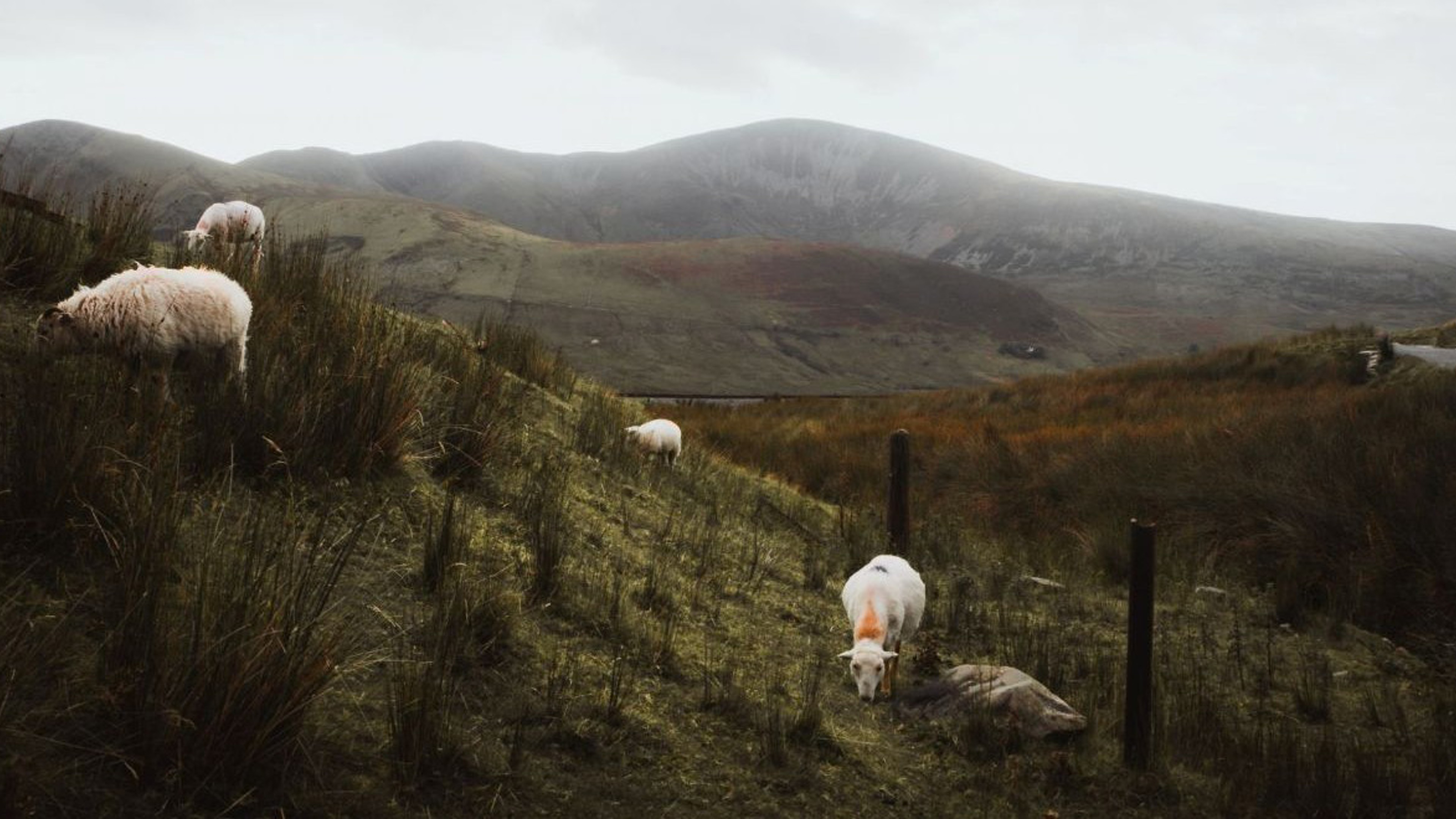
In April 1986, radioactive fallout from Chernobyl reached the hills of Wales. There were no sirens, no evacuations, just rain falling on pasture, and a growing realisation that something unseen had entered the food chain. Sheep grazing on upland farms became the focus of concern, as radioactive caesium accumulated in meat. One Welsh EHO, working in a North Wales rural authority, found himself standing at the edge of a hill farm with a local farmer he had known for years. Between them lay a flock that could not be sold. The guidance was evolving, the science still emerging. The farmer wanted certainty; the officer could only offer honesty, caution, and a commitment to protect both livelihoods and public health.
As a relatively new EHO in West Wales I was sent on a “Radioactivity Course” at Swansea University. Job done. However, what became very clear for me and my colleague Environmental Health Officers on the ground, this was not abstract policy, it was immediate and personal. The effects in Wales were real. Welsh farms, in upland areas of North Wales, were placed under sheep movement restrictions after radioactive caesium was found in the environment. Some restrictions remained in force until 2012, 26 years after the disaster. The scale was enormous: around 9,800 UK holdings and more than four million sheep were originally placed under restrictions. Welsh Government said 327 farms in North Wales were still under some form of control in 2012 before the remaining restrictions were lifted. EHOs across Wales translated complex radiological data into practical controls, restricting movement, sampling meat, liaising with central government, and explaining decisions that were, at times, deeply unpopular. It was environmental health at its most human: balancing evidence, empathy, and enforcement in equal measure.
The Government this year launched its Advanced Nuclear Framework. Their plans are to overhaul the nuclear system that will speed up building, strengthen national and energy security, and cut costs. A new nuclear dawn is proposed although some have referred to it as “irresponsible deregulation”.
Alexandra Bell, President and CEO of the Bulletin of the Atomic Scientists, writing in Nature comments:
“Should the world lean into this nuclear-energy renaissance, policymakers and the public should take unlikely dangers seriously. Despite all the planning, analysis, research and exhaustive review of past catastrophes, the reality is that nuclear accidents will happen, albeit rarely.
"Proper policies and regulations, full transparency, public oversight and emergency preparedness and response mechanisms are key to a safe and viable industry.
"How we prepare will determine whether the devastating events at Chornobyl are remembered, or, sadly, repeated.”
A decade later, in 1996, Wales underwent a profound transformation in how local services were organised under the Local Government (Wales) Act 1994. Mandated by the Conservative government it is widely viewed as a political experiment. It was driven by ideological motives under then Secretary of State for Wales John Redwood, creating 22 unitary authorities designed to weaken the Labour party's stronghold in Wales regional government. A two-tier structure of 8 County Councils and 37 District councils disappeared. The new unitary authorities emerged, and with them came both opportunity and disruption. Prior to 1 April 1996, there were 37 Chief EHOs and 37 Deputy Chief EHOs across the 37 District Councils. Wales EH was a force to be reckoned with. Everything changed on 1 April 1996. The dust has never settled.
For environmental health, this was more than a change of structure. It reshaped professional identity, organisational standing, reporting lines, and the scale at which services were delivered. Where once environmental health were at the top table, the service quickly became displaced to the basements of Town Halls as the big spenders of Social Services and Education took premier position. The same EHOs who had once stood in farmyards explaining radioactive contamination were now navigating new organisational boundaries, holding the line on public protection while the system around them shifted.
A lot of this feels familiar today. We still deal with risks that are often invisible: contaminants in water, pathogens in food, pollutants in air, chemicals in homes. We still operate in a landscape where the science evolves faster than the guidance, where public confidence can be fragile, and where MDM (misinformation, disinformation and malinformation) can travel further and faster than evidence ever could.
We also work within systems that are, once again, under strain, financially, structurally, and politically. The echoes of 1996 are there in today’s conversations regarding local government reform, integration, and the shape of local services. The question is not whether structures change, they always do, but whether, through that change, environmental health remains visible, valued, and sufficiently resourced. I know our English colleagues are engaging with local government reorganisation at every turn and the CIEH continues to make the case for the contribution of environmental health to be recognised and visible. The profession cannot, and must not, be relegated to a reorganisation afterthought.
And perhaps most importantly, the human moment on that Welsh hillside in 1986 has not gone away. It is there when an officer explains to a tenant why their home is unsafe. It is there when a business is told it must close to protect the public. It is there when communities ask: “Is this safe?” and look to us for an answer they can trust. Environmental health is like a small community where people feel responsible for what they see. We do something. What we do matters.
The lesson from both anniversaries is not simply that environmental health adapts. It is that, in moments of uncertainty, whether sudden or systemic, it is environmental health that quietly holds the boundary between risk and reassurance.
And that boundary matters now as much as it ever has.

Environmental health training and courses
Develop the skills your team needs with expert-led environmental health training. With nearly 140 years of experience, our flexible courses are available online, in person or tailored to your organisation.