Looking for a new role in environmental health?
Whether you're just starting out or ready for your next step, EHN Jobs connects you with the latest opportunities in environmental health across the UK.


The results will help shape our future policy work, guide resources and events and support wider conversations with policymakers and stakeholders.
In this blog, CIEH Head of Environmental Health Ian Andrews gives an insight into the results of the survey and unpacks some of its most striking findings.
With a number of potentially big changes on the horizon, it felt timely to ask members some questions that were quite focussed so that we could gather some data as a professional body and then share that back as a “snapshot”. This data could also be helpful when navigating some of the changes we are considering and to further debates within the profession. A range of open and closed questions were used to capture views.
In terms of the make up of those who responded, 70% were working full time, 15% worked part time and the responses included the views of those on a career break as well as those working towards a qualification. By sector, 21% of respondents were working in the private sector with the majority (61%) working in Local Government. Less than 2% of respondents included port health within their role but an appreciable 19% included workplace safety within their role. 96% of respondents were CIEH members.
Unsurprisingly to me, 80% of respondents were in favour of a new system (entailing either a license or a permit) that would require food business owners to submit certain documents in advance of opening because of the way it might reduce risks to consumers. Only 11% were against such a system and 9% were unsure. This reflects an established view within the profession that the current registration system isn’t effective. In terms of improvements, in a later question, members offered helpful solutions (which I will be reflecting upon in a different format in the future) but a very recurrent theme was the broad scope of low-risk food businesses that draw in valuable resource time. Comments included the following:
“EHPs play a vital role in protecting public health, some routine practices may consume time disproportionate to the actual risk.”
“Time is spent unnecessarily inspecting some very low risk businesses such as drink only pubs, green grocers, pharmacies.”
“The premises profile could be much reduced if a more intelligent and targeted basis for registration / intervention was in place.”
“A licensing scheme to fund controls would work better.”
Linked with this, an overwhelming 92% of responders felt that the growth in sales of food items through social media and online marketplaces was posing a risk to consumers with food allergies or sensitivities. Dr Julie Rasmussen of Infinitas, a consultancy based in Wales, highlights some of the issues with how registration isn’t compatible with online sales platforms in this insightful blog: Register a Food Business (UK): The Social Selling Blind Spot.
Less than 15% of respondents expressed confidence in current operational controls at Border Control Points (BCPs) to prevent foods that pose a risk from entering the wider UK system. Staffing capacity and process vulnerabilities (e.g., goods moving inland before clearance; documentation reliance) increasing the opportunities for fraud were the most common concerns given, as well as calls for greater intelligence sharing with inland Local Authorities (LAs). When asked to look ahead to future trends and consider what risks could emerge, the following were among the greatest concerns:
• Poor labelling; overprocessed foods and additives; novel foods/Genetically Modified Organisms (GMOs); chemical residues in import.
• Illegal substitution, false origins, misdescription, and undeclared allergens (especially in cheaper imports).
• Risks of importing diseases and need for strong biosecurity.
• Pressure from countries with lower food safety or welfare standards and how these might undermine domestic norms.
Linked with this, a slight majority of respondents (53%) felt that improved controls at ports and in BCPs could reduce the need for inland activity and enforcement, although more than 1 in 4 disagreed with this concept.
The Primary Authority scheme was an issue that drew out some strong views. 56% felt that the Primary Authority scheme continues to remain relevant, with a notable 30% believing it did not. Free text comments about the scheme were telling, including the following:
“Feels like it is seen as something larger businesses can hide behind.”
“…LAs are struggling with resources and to have officers put in a position to make nationwide decision can have negative impact on mental well-being…”
“All too many times, LAs sign up and do not produce any guidance for LAs inspecting. This should be made mandatory if signing up to the scheme.”
”It is inconsistently operated.”
The majority of respondents were aware of the concept of National Level Regulation (63%) and an open question inviting comments on the concept yielded mixed views:
“Many large companies already have primary authority partnerships which are supposed to assist with compliance. In reality we still see food hygiene and safety breaches at a local level despite having uniform policies.”
“Flawed by design, encouraging conflict of interest and lack of transparency at its finest.”
“Not dissimilar to companies adopting BRCGS and similar certification systems.”
“…would prefer it if National Regulation also meant National Level intervention and enforcement.”
“It has been shown through recent court cases that self-enforcement doesn't work.”
The final few questions within the survey were designed to be more forward-thinking. A clear range of views were expressed about the role of AI in the future, as the below graph highlights.
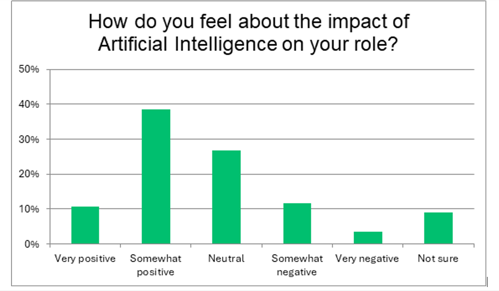
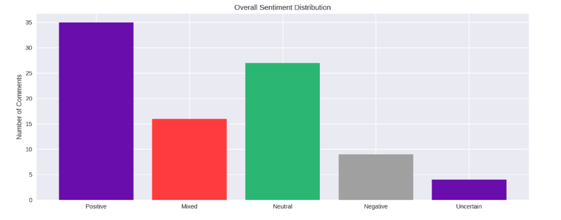
Free-text comments highlighted both challenges to adoption and some of the possible advantages of adoption. Of the nearly 100 free text comments on this topic, many noted productivity gains for letters, reports, or presentations but there was clear recognition technology could not replace onsite inspections or contextual judgement:
“We are currently working on this in our own team. However, the barriers to achieving this are a lack of money to get the right systems and equipment in place alongside existing systems which are nearly 30 years old.”
“I am concerned that food business operators may use AI as a replacement for appropriate training, knowledge and understanding. We have already had some FBOs falsifying traceability records.”
“AI does not always have the correct information.”
The next questions were about potential changes that might help LAs to recruit more food inspection staff. Most comments offered practical solutions including more training opportunities, better pay, and more promotion of the career. There was, however, uncertainty about the prospects of change without systemic reform. There was also tangible frustration over low pay, lack of investment, and heavy workloads. Evidencing this latter point, 34% reported feeling unwell as a result of work-related stress during the previous 12 months.
Finally, a range of options were offered to minimise spending time on what I would term as “lower value” work. The suggestions included issues to do with how low-risk premises are inspected. In recent months we have worked with a group of members to put forward positive and practical options to the FSA on how to maximise enforcement resources within the wider system and we will continue to be active in seeking change for the benefit of the public as we head into 2026. We look forward to hearing further views from you on this topic... and more!

Looking for a new role in environmental health?
Whether you're just starting out or ready for your next step, EHN Jobs connects you with the latest opportunities in environmental health across the UK.